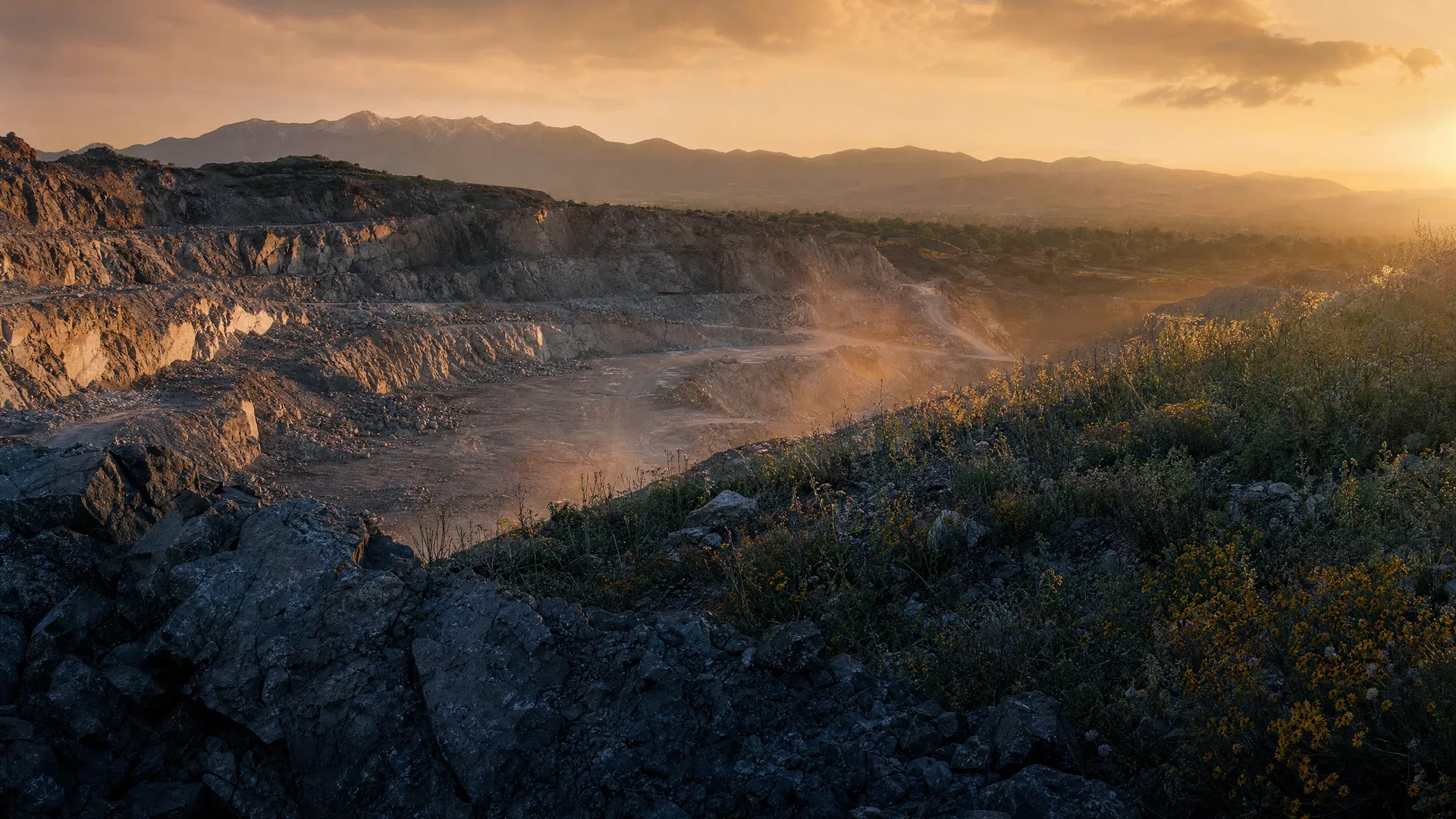
For more than half a century, a commercial rock quarry carved deep into the walls of Provo Canyon, extracting limestone and aggregate from the base of the Wasatch Mountains. The operation left behind 245 acres of blasted rock faces, compacted soil, disrupted drainage patterns, and barren earth — a wound cut into one of Utah's most beloved landscapes, visible to every driver who turned off US-189 and headed up the canyon toward Sundance, Vivian Park, or the trailhead at Mount Timpanogos.
Vesper Amphitheater is healing that wound. What is being built here is not just a concert venue. It is an act of environmental restoration — a deliberate, decade-long commitment to returning damaged land to the community and to the canyon that surrounds it. The project represents one of the most ambitious land reclamation efforts in Utah Valley's history, and it raises a question that matters far beyond this particular canyon: what do we owe to the landscapes we have damaged?
The Problem with the Quarry
To understand what Vesper is doing, you first have to understand what the quarry did.
Geneva Rock Products, founded in 1954 to supply ready-mix concrete and aggregate for the postwar construction boom in the Intermountain West, operated the Provo Canyon quarry for decades as Utah Valley grew from a modest agricultural community into one of the fastest-growing metropolitan areas in the United States. The limestone and aggregate extracted from the canyon walls went into roads, buildings, and infrastructure across the region. The quarry was, in a narrow economic sense, productive.
But the costs were borne by the canyon itself. Decades of extraction stripped the site of topsoil and organic matter. The blasted rock faces left behind are inhospitable to native vegetation — the quaking aspen, Gambel oak, sagebrush, and native wildflower meadows that define the Wasatch foothills cannot take root in compacted, nutrient-depleted substrate. Without vegetation, there is no root structure to hold the soil. Without root structure, every rainstorm carries sediment directly into the Provo River, one of the premier blue-ribbon trout fisheries in the American West.
The visual impact is equally significant. The quarry sits at the mouth of Provo Canyon — one of the first things visitors see as they enter from the valley. For a region that markets itself on the strength of its natural beauty, the sight of 245 acres of grey blasted rock is a contradiction that has been quietly accepted for too long.
"The quarry creates a physical and psychological barrier between Provo's neighborhoods and the canyon's natural resources. There are no trails, no gathering spaces, and no reason for the community to engage with this stretch of the canyon." — Vesper Amphitheater Stewardship Plan
The Transformation
Vesper's restoration plan is built on six pillars, each addressing a specific dimension of the damage the quarry caused.
Native Revegetation is the foundation. Over 50 species of native plants, grasses, and trees are being reintroduced to the quarry site — including quaking aspen, Gambel oak, sagebrush, and native wildflower meadows. The goal is not a manicured landscape but a self-sustaining ecosystem that requires minimal intervention once established. This is not landscaping. It is ecological reconstruction.
Soil Remediation comes first, because without healthy soil, revegetation cannot succeed. Decades of quarry operations stripped the site of topsoil and organic matter. The restoration process begins with soil rebuilding — importing clean fill, composting organic material, and establishing root systems that prevent erosion and rebuild soil health over time. It is slow, unglamorous work, and it is essential.
Water Stewardship addresses the Provo River directly. Vesper's water management plan protects the river watershed through advanced stormwater capture, bioswales, and permeable surfaces. Sediment that once flowed unchecked from the quarry into the river will be contained and filtered naturally. The River Walk trail — 3.1 miles of gentle path along the Provo River — will provide the first dedicated public access along this stretch of the river, connecting anglers, kayakers, and families to a resource that has been inaccessible for generations.
Wildlife Habitat restoration creates corridors for mule deer, elk, and migratory birds. Nesting boxes, pollinator gardens, and undisturbed buffer zones ensure that wildlife returns to a site that has been inhospitable for decades. The restored landscape is not just aesthetically pleasing — it is ecologically functional, providing habitat connectivity in a region where development pressure has fragmented wildlife movement corridors.
Net-Zero Operations commits Vesper to carbon-neutral venue operations through renewable energy, waste diversion, and carbon offset programs. The venue's design maximizes natural ventilation and daylighting to reduce energy consumption. This is not a marketing claim — it is a design constraint that shaped every architectural decision made during the planning process.
Trail Connectivity may be the most immediately tangible benefit for Provo residents. 18.6 miles of new public trails will connect the city's neighborhoods to the canyon's natural resources — creating a continuous corridor for hiking, biking, and running that did not exist before. The trails are free and open year-round, regardless of whether a concert is scheduled.
This Has Been Done Before — And It Works
Skeptics of large-scale quarry restoration are not wrong to be skeptical. The history of industrial land reclamation is littered with projects that promised ecological renewal and delivered cosmetic cover. But there are genuine success stories that demonstrate what is possible when restoration is treated as a primary goal rather than an afterthought.
The Eden Project in Cornwall, England, transformed a former China clay quarry into one of the world's most visited botanical gardens, featuring biomes housing thousands of plant species from around the world. The project faced the same challenges Vesper faces — poor soil quality, disrupted drainage, and a site that had been stripped of its ecological capacity — and overcame them through a combination of soil science, landscape architecture, and long-term commitment.
Closer to home, FirstBank Amphitheater in Franklin, Tennessee opened in 2021 on the site of a former rock quarry that had been abandoned with hundreds of tons of faulty cement culverts left behind. The transformation of that site into a 7,500-capacity live music venue demonstrated that quarry reclamation and world-class performance infrastructure are not mutually exclusive goals. Vesper goes further — the Tennessee venue is a concert facility built on reclaimed land; Vesper is a conservation project that includes a concert facility.
The Dalhalla Amphitheatre in Sweden, carved from a former limestone quarry in the Dalarna region, has become one of the world's most celebrated outdoor performance venues, with acoustics shaped by the quarry walls themselves. The natural geometry of the excavated rock creates a listening environment that no purpose-built venue can replicate. Vesper's designers studied Dalhalla carefully.
The Numbers That Matter
| Metric | Value |
|---|---|
| Acres of damaged quarry land restored | 245 |
| Miles of new public trails | 18.6 |
| Native plant species reintroduced | 50+ |
| Miles of new Provo River access | 3.1 |
| Carbon commitment | 100% net-zero operations |
| Projected annual economic impact | $41 million |
| Permanent jobs created | 125+ |
| Annual visitors projected | 180,000+ |
What This Means for Utah
Utah is growing faster than almost any other state in the nation. The Wasatch Front is projected to add more than a million new residents over the next two decades, and the pressure on the natural landscapes that define Utah's identity — the canyons, the rivers, the mountain trails — will intensify accordingly.
The question of how to accommodate that growth without destroying what makes Utah worth living in is not abstract. It is being answered, one development decision at a time, in communities across the state. Vesper is one answer to that question — an answer that says growth and conservation are not opposites, that damaged land can be healed, and that the communities built around natural landscapes have both the right and the responsibility to restore what has been taken from them.
The quarry in Provo Canyon was a wound. The wound is being healed. That is not a small thing.
For more on the conservation mission, visit vesper.variablemedia.ai/stewardship. To read about the architectural decisions behind the restoration, see Building with the Mountain, Not Against It. For trail information, see Reconnecting the Canyon: The Complete Trail Guide.