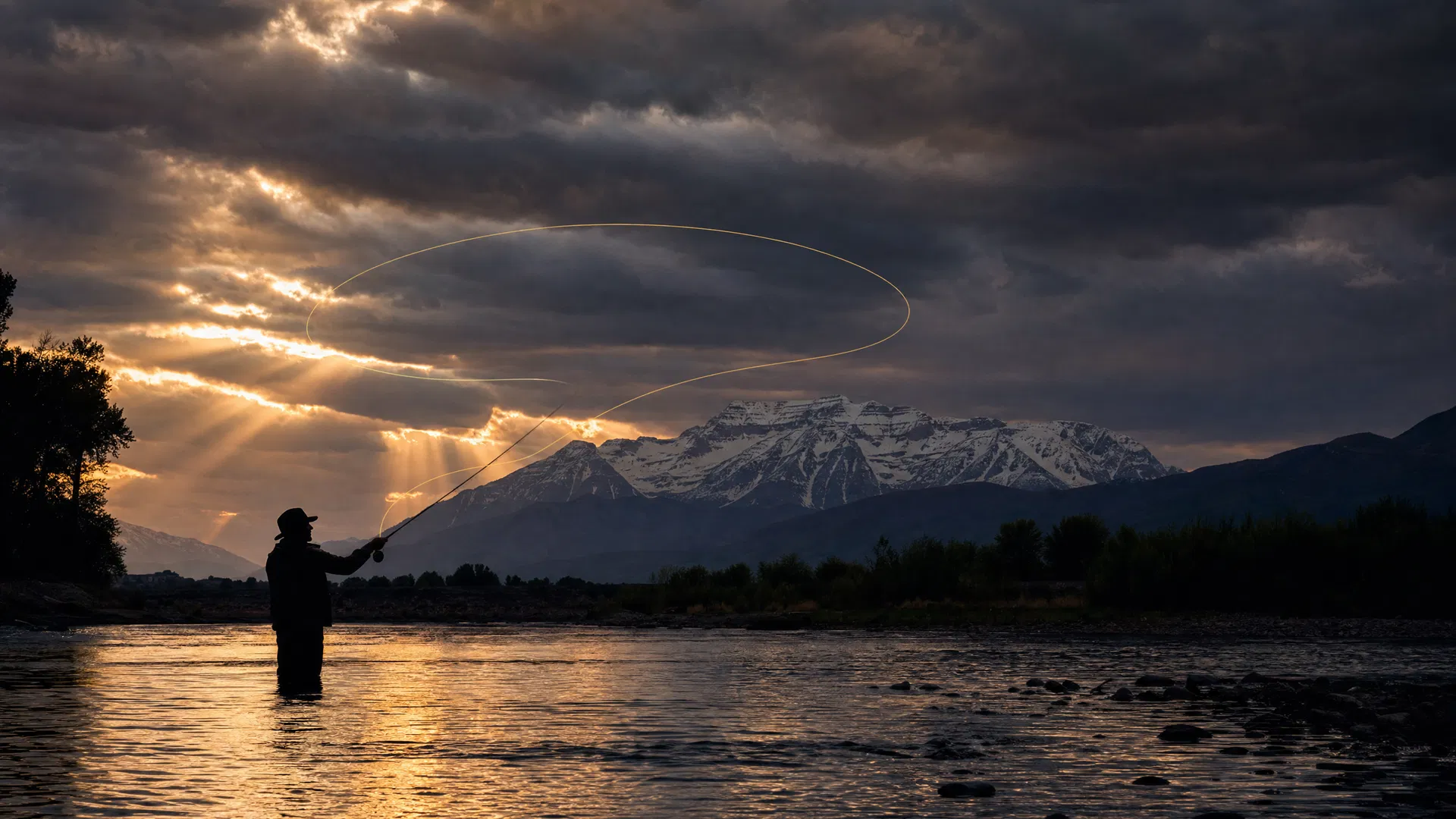
Forget Montana. Forty-five minutes from Salt Lake City International Airport, one of the most productive wild trout fisheries in the American West is waiting — and most anglers have never heard of it.
The Middle Provo River carries approximately 3,500 wild brown trout per mile. The Lower Provo, which flows through Provo Canyon past Bridal Veil Falls and into the valley below, holds an estimated 4,500 fish per mile — one of the highest densities of wild trout in the entire Western United States. These are not hatchery fish. They are wild, educated, selective trout that have grown fat on the Provo's prolific insect hatches and learned to refuse anything that doesn't look exactly right.
Fishing the Provo is not easy. But that is precisely the point.
Understanding the Provo River System
The Provo River is not a single fishery — it is a system of distinct sections, each with its own character, regulations, and seasonal rhythms. Understanding the differences between them is the first step toward fishing them effectively.
The Middle Provo River flows for approximately 12 miles from Jordanelle Dam through the Heber Valley to Deer Creek Reservoir. Fed by cold, deep releases from the bottom of Jordanelle Reservoir, the water stays at a remarkably consistent temperature year-round. This is tailwater fly fishing at its finest — 3,500+ wild trout per mile, average fish 12–14 inches, with trophy browns regularly exceeding 20 inches.
The Provo River Restoration Project, completed in 2008, transformed this section from a channelized agricultural ditch back into a meandering, braided river with connected side channels and restored riparian vegetation. Fish populations increased by over 300 percent following the restoration.
The Lower Provo River flows from Deer Creek Dam through Provo Canyon — 9 miles of blue-ribbon water that runs alongside US-189, past Bridal Veil Falls, and down to the canyon mouth. This is the section that flows through the Vesper site, and it is arguably the most visually dramatic fly fishing in Utah. Rainbows and browns in the 14–18 inch range are common, with fish exceeding 20 inches present throughout the canyon.
Access Points
| Access Point | Location | Best For |
|---|---|---|
| Rock Cliff / Jordanelle Dam | SR-32 north of US-40 | Lunker Lane, high-density water |
| River Road Upper | Off US-40 | Riffles and pools, moderate pressure |
| Midway Lane / Legacy Bridge | SR-113 bridge | Regulation boundary; excellent water both directions |
| River Road Middle | Multiple pullouts | Lower pressure, great sight-fishing |
| Charleston Bridge | Charleston town | Bait allowed; good for beginners |
| Bridal Veil Falls Area | US-189, Provo Canyon | Pocket water, dramatic setting |
| Trestle Bridge Hole | Canyon mouth, Orem | Summer caddis hatches, big browns |
Regulations: Know Before You Go
Middle Provo — Jordanelle Dam to Legacy Bridge: Artificial flies and lures only. Limit: 2 trout under 15 inches. All trout 15 inches and over must be immediately released.
Lower Provo — Deer Creek Dam to Olmstead Diversion (Provo Canyon): Artificial flies and lures only. Limit: 2 trout under 15 inches. All trout 15 inches and over must be immediately released.
A Utah fishing license is required for all anglers 12 and older.
The Hatch Calendar
Winter (December–February): Midge season. The tailwater sections stay fishable even in freezing temperatures. The magic window is 10am–3pm when midges hatch in the noon sun. Fish size 22–26 Zebra Midges and Mercury Midges.
Spring (March–May): Blue-Winged Olive hatches begin in March. PMDs peak through May, offering some of the most exciting dry fly fishing of the year. Target the 10am–2pm window. Fish BWO Sparkle Dun #18–20 and PMD Cripple #16–18.
Summer (June–August): PMDs continue through June, then caddis dominate the evenings. Terrestrials — hoppers, beetles, ants — become increasingly important through July and August. Fish early morning (6–9am) and evening (6–9pm). The hopper-dropper rig is one of the most effective summer setups on the Provo.
Fall (September–November): The most beautiful time to fish the Provo. BWOs return in smaller sizes, and the October Caddis provides spectacular late-season dry fly action. Brown trout pre-spawn aggression peaks in October — watch for spawning redds and avoid wading on them.
The Vesper Fly Fishing Center
Beginning with Vesper's opening season, the Fly Fishing Center will offer guided half-day and full-day trips on the Lower Provo River, casting clinics for beginners, equipment rental, and locally tied flies matched to current hatch conditions. All guides are licensed Utah fishing professionals with deep local knowledge of the Provo system.
"The river doesn't care how far you traveled to get here. It only cares whether you can read it." — Vesper Fly Fishing Center Guide Philosophy
The Provo River is not the kind of place you visit once. It is the kind of place that gets into your blood — the way the morning light hits the water in October, the way a big brown trout materializes from the depths to inspect your fly and then, impossibly, takes it.
Explore more: Restoring the Provo River Ecosystem · Reconnecting the Canyon: Vesper's New Trail System · Trout Bum 2 Guide Service